
What the Anthropic–Pentagon Ruling Means for AI Governance
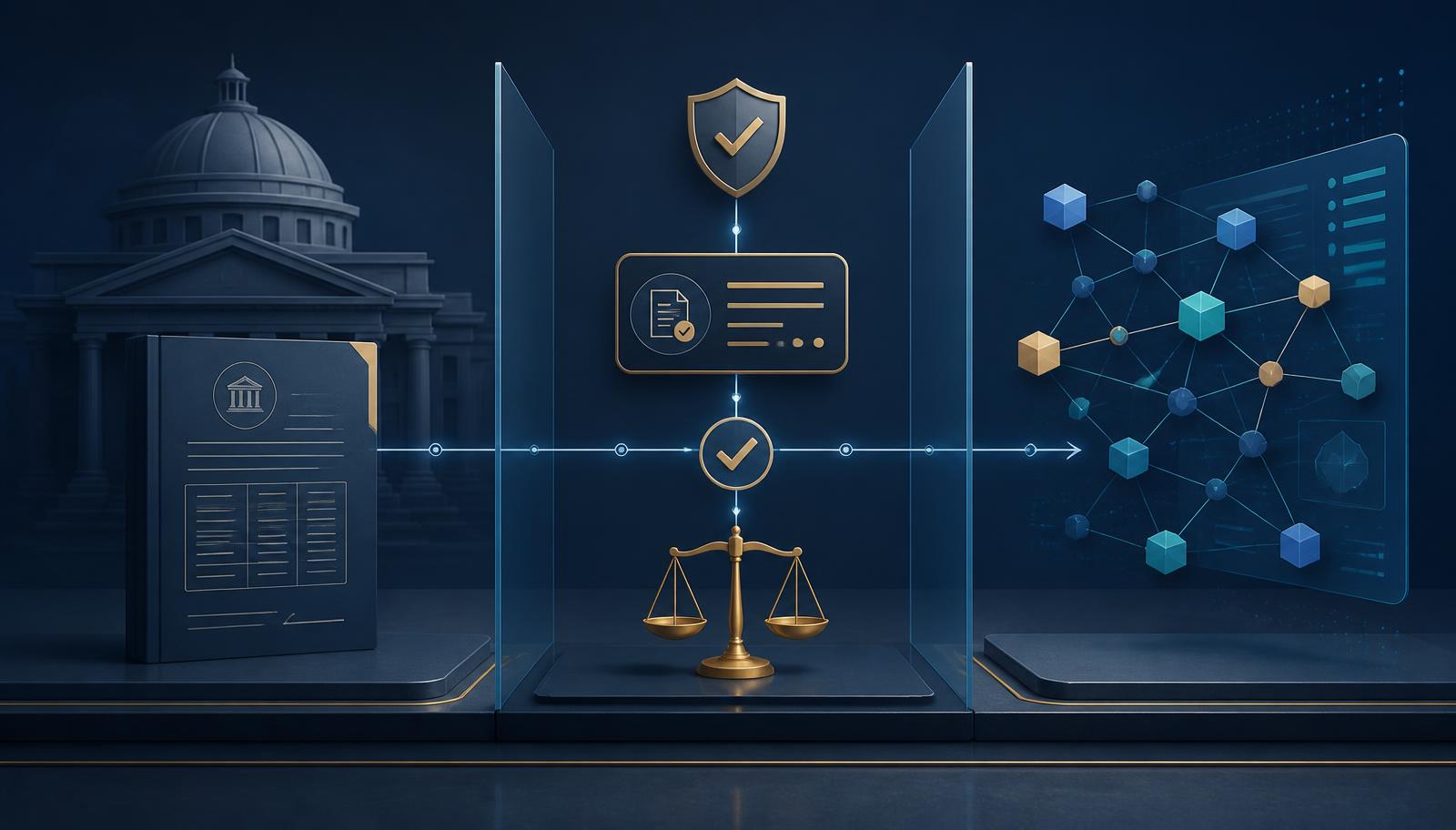
A U.S. federal judge's decision to block the Pentagon's blacklisting of Anthropic does not certify Claude for every government use. Its more important lesson is that AI procurement decisions—including vendor restrictions, safety conditions and risk designations—require evidence, defined authority, due process and continuing review.
When AI Safety Rules Collide With Government Procurement
On August 27, 2026, a United States federal judge blocked the Pentagon's designation of Anthropic as a national-security supply-chain risk. The dispute arose after Anthropic declined to remove restrictions that prevented its Claude models from being used for mass domestic surveillance or fully autonomous weapons.
The decision is significant, but it should not be reduced to a simple contest between an AI company and the government. It does not establish that Claude is suitable for every government or military use. It does not prevent a public agency from selecting another supplier. Nor does it eliminate the need for rigorous security reviews of AI vendors.
Its deeper importance is about governance: who defines the limits of an AI system, how those limits are incorporated into procurement, what evidence supports a risk decision, and what process must be followed when a vendor's safety conditions conflict with a customer's intended use.
What the Court Decided
The Pentagon had characterized Anthropic as a supply-chain risk after the company resisted broader military use of Claude. According to reporting on the 59-page order, U.S. District Judge Rita Lin concluded that the designation was unlawful and unsupported, finding that the measures imposed on Anthropic amounted to retaliation and lacked the process and evidentiary basis required by law.
The court's reasoning matters because a supply-chain-risk designation can have consequences far beyond one contract. It can affect a vendor's reputation, eligibility for future work, relationships with contractors and subcontractors, and use across other parts of government. A decision with that reach must be tied to an identifiable risk and made through a defensible process.
At the same time, the ruling preserves an important distinction: a government customer can decide that a vendor does not meet its operational requirements. What it cannot necessarily do is transform a disagreement over contract terms or safety restrictions into a sweeping national-security judgment without adequate evidence and due process.
A separate Anthropic challenge concerning another designation remained pending when the ruling was reported. The legal position may therefore continue to evolve.
AI Governance Begins Before the Contract Is Signed
Many organizations treat AI procurement as a conventional technology purchase: compare features, assess price, approve the vendor and deploy the product. The Anthropic dispute demonstrates why that approach is no longer sufficient.
An AI provider's acceptable-use policy, technical safeguards and model restrictions may determine what the customer can do with the system. Those limits are not peripheral legal language. They are part of the product's operating conditions and risk architecture.
If these questions are left until deployment, the organization may discover that it purchased technology that cannot lawfully, safely or contractually perform the work expected of it.
- What uses does the vendor prohibit or restrict?
- Do those limits conflict with the organization's intended use?
- Can the vendor change its terms, safeguards or service availability?
- What happens if a future law, regulator or procurement authority restricts the vendor?
- Can the organization continue operating if the service is withdrawn?
- Who has authority to accept a change in risk or permitted use?
Vendor Risk Must Be Evidence-Based
The ruling also reinforces a basic governance principle: risk labels should follow evidence.
Terms such as unsafe, non-compliant, high risk and supply-chain threat can produce major commercial and operational consequences. They should not be assigned simply because an AI supplier takes a position that a customer dislikes. A defensible assessment should identify the relevant threat, vulnerability, exposure, likelihood, impact, supporting evidence and decision owner.
A vendor may be strong in one category and unacceptable in another. Governance should preserve those distinctions rather than compressing them into a single approval or rejection.
- Technical risk: can the system fail, be manipulated, expose information or act outside its intended boundaries?
- Vendor risk: can the provider meet security, resilience, support, transparency and contractual requirements?
- Use-case risk: is the proposed application appropriate given its impact on people, rights, safety and operations?
- Strategic dependency risk: what happens if access, terms, ownership, regulation or government policy changes?
Safety Guardrails Are Also Allocation-of-Control Decisions
The dispute highlights a tension that will become more common as AI systems gain greater autonomy. Vendors may impose safeguards to prevent uses they consider dangerous, while enterprise or government customers may argue that they—not the supplier—should control lawful use after procurement.
This is not merely an ethical debate. It is a question of authority, accountability and liability.
If a vendor retains the ability to restrict or disable a capability, the customer has a dependency that must be governed. If the customer can remove safeguards, it may assume greater responsibility for resulting harms. If neither party's responsibilities are explicit, accountability can become unclear precisely when an incident occurs.
Governance is strongest when these obligations are connected to named owners, review dates and evidence—not left as static contractual language.
- Permitted and prohibited uses
- Which safeguards are mandatory
- Who can change or override them
- How changes are communicated and approved
- Monitoring, logging and audit rights
- Incident-notification responsibilities
- Suspension and termination conditions
- Transition, continuity and data-return arrangements
Procurement Decisions Must Remain Reviewable
AI risk changes quickly. A vendor approved today may later change its model, ownership, infrastructure, data practices, acceptable-use policy or geopolitical exposure. Governments and regulators may also impose new restrictions.
An AI-vendor approval should therefore have a lifecycle, with reassessment triggered by defined events.
This is particularly important for Canadian engineering, architecture, consulting and professional-services firms that work with governments or U.S. clients. A vendor decision in another jurisdiction may affect project eligibility, subcontracting obligations, data handling or continuity even when it does not directly change Canadian law.
- A material change to the model or service
- A change in acceptable-use terms or safety controls
- A significant security or privacy incident
- A regulatory, sanctions or procurement restriction
- A change in hosting location, subprocessors or data handling
- Expansion into a higher-impact use case
- Evidence that the system no longer meets performance or oversight requirements
What Organizations Should Do Now
The practical response is not to remove Anthropic—or any other provider—from an approved-vendor list solely because a dispute occurred. Nor should the court decision be treated as blanket validation of the vendor.
These steps turn procurement from a one-time purchasing event into a continuing governance process.
- Review the permitted uses and safety restrictions attached to each important AI service.
- Record the evidence and reasoning behind vendor approvals, restrictions and rejections.
- Identify contracts or clients that could impose additional AI-vendor requirements.
- Establish reassessment triggers for legal, regulatory, security and contractual changes.
- Maintain continuity plans for critical AI-enabled workflows.
- Ensure that high-impact use cases receive human authorization beyond routine technology procurement.
The Broader Lesson
The Anthropic–Pentagon ruling shows that AI governance constrains both the use of technology and the exercise of institutional power around it. Vendors need clear, credible safety boundaries. Customers need control, continuity and assurance that a product can support their lawful objectives. Governments and enterprises need evidence-based processes when they classify a provider as unacceptable.
Those interests will not always align. Effective governance does not pretend that they will. It creates a transparent way to identify the conflict, assign decision authority, examine evidence, document the rationale, protect affected parties and revisit the decision as circumstances change.
For organizations adopting AI, the central question is no longer simply, "Which model should we buy?" It is: "Under whose rules will this system operate, what happens when those rules conflict, and can we demonstrate that our decision was responsible?"
That is the difference between buying AI and governing it.
Important Notice
This article provides general information about AI governance and does not constitute legal advice. The ruling discussed is a U.S. decision and should not be treated as a statement of Canadian law. A separate Anthropic challenge concerning another designation remained pending when the ruling was reported.
Assess whether your organization's AI-vendor decisions are documented, evidence-based and ready for executive scrutiny. Explore the Clariantix AI Trust Assessment™.
"The question is no longer simply which model to buy. It is under whose rules the system operates, what happens when those rules conflict, and whether the decision can be shown to be responsible."
- Blocking a supply-chain-risk designation is not the same as approving a vendor for every government use.
- Vendor acceptable-use terms and safety controls are operating conditions, not peripheral legal language.
- Technical, vendor, use-case and strategic dependency risks should be assessed separately.
- Safeguard authority—who can change or override controls—must be explicit in AI contracts.
- AI-vendor approvals need reassessment triggers and continuity plans, not one-time sign-off.
- Consequential AI decisions must rest on evidence, named decision owners and a reviewable process.
- US judge blocks Pentagon's Anthropic blacklistingReuters (28 August 2026)
- Anthropic PBC v. U.S. Department of War, Case No. 3:26-cv-01996-RFL (N.D. Cal.) — docketCourtListener